
 Image 1 of 2
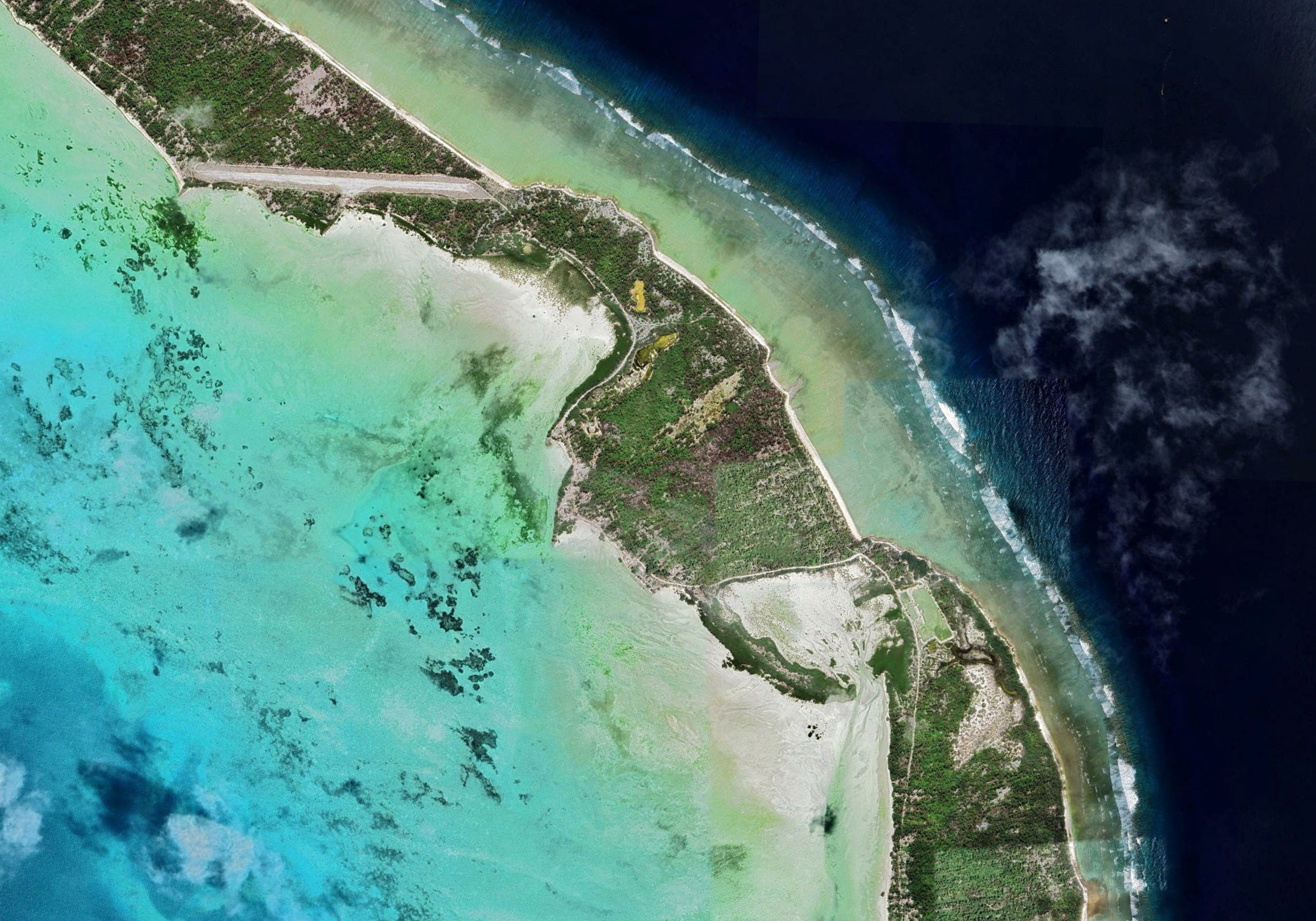 Image 2 of 2
Nonouti Island, Gilbert Group, Kiribati
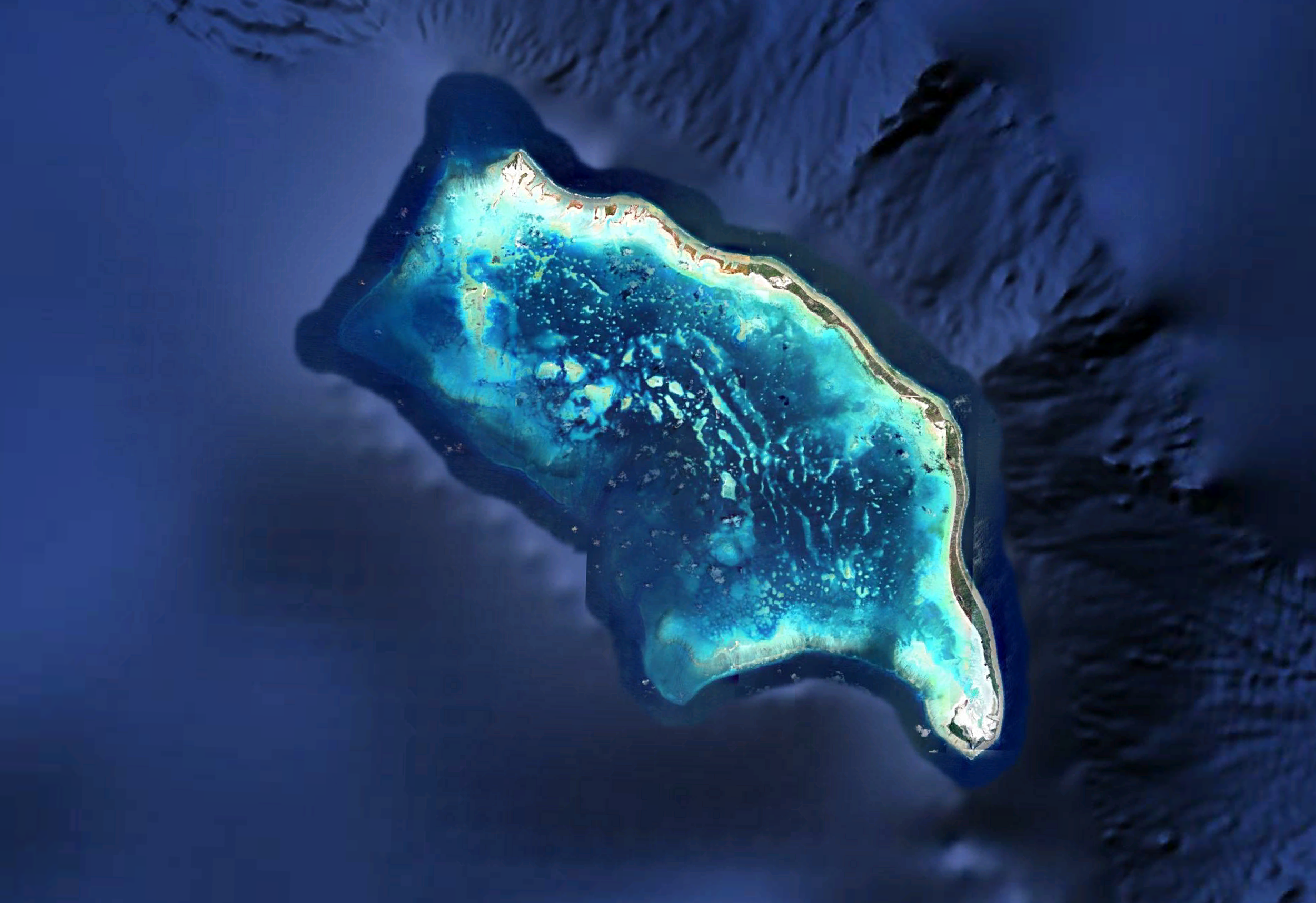
Nonouti Island is a remote atoll in the southern Gilbert Islands of the Republic of Kiribati. Situated approximately 156 miles (250 km) south of Tarawa, it is the third-largest atoll in the Gilbert group and home to approximately 3,000 residents.
Long, narrow and seldom visited by international anglers, Nonouti surrounds an expansive lagoon scattered with shoals, sandbanks and shallow-water habitat. Government fisheries research has specifically identified the island’s relative abundance of bonefish – and the potential to develop a carefully managed recreational fishery.
This is exactly the sort of destination that interests us at No Slack Loops: isolated, logistically challenging and largely unexplored with a fly rod. So we’re setting up a camp there, in conjunction with some trusted Kiribati friends, and you’re welcome to come along in 2027.
LOCATION
Nonouti lies just south of the equator, approximately 150 miles (250 km) south of Tarawa and 25 miles (40 km) north of Tabiteuea. It’s genuinely isolated!
The atoll stretches roughly 22 miles (35 km) from north to south and is approximately 9 miles (15 km) across at its widest point. So it;’s small. Most of its permanent land lies along the eastern rim, while the lagoon is broken up by extensive shoals, sandbanks and shallow flats. A passage through the western reef provides access to the lagoon, with further reef passages and interconnected islets in the north.
The uninhabited islet of Noumatong, on the north-western side of the atoll, has traditionally been reserved as a bird sanctuary.
Nonouti also holds an important place in Kiribati’s cultural history. Catholicism was introduced here by returning I-Kiribati laborers in the early 1880s, with the first Catholic missionaries arriving in 1888. From Nonouti, the Catholic mission subsequently spread through the Gilbert Islands.
GETTING THERE
Unlike Kanton Island, Nonouti can be reached through Tarawa. International guests first travel to Bonriki International Airport before connecting onto a domestic Air Kiribati flight to Nonouti.
At the time of writing, Air Kiribati operates very limited Twin Otter services between Tarawa and Nonouti. These schedules can change, seats and baggage capacity are restricted, and weather or operational delays must be treated as part of travel in the outer islands.
The scheduled air service makes Nonouti more accessible than the Phoenix Islands, but organizing an angling expedition remains far from straightforward. Boats, fuel, accommodation, food, drinking water, local transport, fishing permissions and suitable guiding arrangements all need to be coordinated on the island well in advance.
We work directly with the Nonouti community, Island Council and relevant Kiribati authorities to arrange legitimate access and local support. This is not a destination where visiting anglers should arrive into Tarawa unannounced and expect to fish the atoll.
NONOUTI’S FISHERY
Nonouti’s lagoon is known locally for its exceptional bonefish. Kiribati fisheries research has documented a substantial subsistence bonefish fishery and identified the development of a dedicated bonefish management plan as an important objective for the island.
The lagoon’s combination of sandbanks, shallow flats, reef edges and deeper channels gives it intriguing exploratory potential. Alongside bonefish, local fisheries surveys have recorded bluefin trevally, brassy trevally, snapper, emperor fish and a variety of other reef and lagoon species.
Nonouti has only had limited professionally organized exploration by visiting fly anglers. We therefore approach it honestly: our trips remain exploratory expeditions, not a ‘pick-your-week’ established lodge fishery with years of catch records and mapped flats.
Our first objective is to continue to better understand the atoll, its tides, access routes, productive flats, fish movements and the practical limits of our boats and infrastructure. There are always genuine unknowns. That uncertainty is precisely what makes our expeditions exciting.
We always operate on a catch-and-release basis for bonefish, trevally and other sporting species. Our aim is to work alongside the community to demonstrate the long-term value of a conservatively managed recreational fishery, while ensuring that local fishing rights and subsistence needs remain respected.
DATES
We are currently organizing our first week-long Nonouti Island exploratory expedition for mid-2027. Please contact us if you’re interested in attending. Prior to this date, we will be building simple accommodation and renovating support facilities for our small groups.
Places will be limited to six anglers. We welcome expressions of interest from experienced anglers who understand the realities of exploratory travel and are comfortable with basic accommodation, changing schedules and fishing new water.
DETAILS
Our proposed itinerary has guests arriving into Tarawa before traveling together on the domestic flight to Nonouti. The expedition will spend seven nights on the island before returning to Tarawa.
Your international flights to/from Kiribati are excluded from the advertised trip fare.
The trip fare includes Tarawa accommodation before and after the domestic flight as required, air transfers to/from Tarawa, fishing permissions and licenses, meals and drinks on Tarawa, all accommodation and meals on Nonouti Island, snacks during the day and pre-dinner, drinking water, limited range of beverages, local guides, boats, fuel and on-island transfers.
Accommodation is in traditional thatched huts, in line with our facilities on remote Kanton and Fanning Islands. Facilities are basic, and anglers should expect limited electricity, Starlink, simple washing arrangements and none of the amenities associated with a conventional fishing lodge. Small rechargeable cooling fans, mosquito netting and other essential supplies will be provided for guests and we will have limited solar recharging facilities.
Packing suggestion: bring a small portable folding solar panel to recharge your phone or camera; a wise addition to the kit listed in our gear guidelines supplied to all confirmed anglers. This allows you to add charge to your phone in the event that our group’s solar resources are depleted.
Fishing will be conducted using locally available boats, supplemented by wading where tides and bottom conditions allow. Because this is an exploratory trip, each day may involve a combination of fishing, travelling, walking and investigating new areas of the lagoon.
This expedition will suit anglers who value discovery and cultural experience as much as catch numbers. Flexibility, patience and a sense of humour are essential.
If you want to help us explore one of Kiribati’s least-known bonefish destinations, give us a call or drop us an email.
EXTEND YOUR EXPEDITION TO CHRISTMAS ISLAND OR FANNING ISLAND
We can arrange an optional second week fishing Kiritimati—Christmas Island in conjunction with our partners at Isolation Outfitters, or a second week on Fanning Island via CXI.
The current inter-island schedule provides an unusually effective way to combine two or even three very different Kiribati fisheries. After returning from Nonouti to Tarawa on Monday, anglers spend a buffer night in Tarawa before flying directly to Kiritimati on Wednesday.
Christmas Island
You can fish six days on Christmas Island before departing directly for Honolulu the following Wednesday, landing on Tuesday in Honolulu after crossing the International Date Line.
We arrange accommodation and guiding at Ikari House via Isolation Outfitters.
Fanning Island
Anglers travelling to Nonouti can extend their expedition with a second remote-island experience on Fanning Island—Tabuaeran.
After returning from Nonouti, the group flies from Tarawa to Kiritimati on Wednesday. Following an overnight stay on Christmas Island, we continue by Air Kiribati Twin Otter to Fanning Island on Thursday morning.
We remain on Fanning until Tuesday afternoon, returning to Kiritimati in time for the following morning’s direct flight to Honolulu.
This creates an exceptional journey through three distinct parts of Kiribati: Tarawa and Nonouti in the Gilbert Islands, Kiritimati as our gateway in the northern Line Islands, and the extraordinarily remote atoll of Fanning.
The extension provides five full fishing days on Fanning, with additional fishing potentially available around the arrival and departure schedule. Anglers can expect opportunities for big bonefish and giant trevally across an atoll that receives remarkably little international fishing pressure.
Accommodation is more established on Fanning, but still traditional raised huts, and the extension includes guided fishing, meals, local boats, fishing license, accommodation on Fanning, plus overnight accommodation on Kiritimati before and after the inter-island flights.
Flights between Tarawa, Kiritimati and Fanning, together with the international departure to Honolulu, are included from the extension fare. Please call us to begin planning your program.
As with Nonouti, travel to Fanning requires flexibility. Inter-island services are operated using small aircraft with restricted baggage capacity, and schedules can be affected by weather and operational requirements. Rods, luggage and essential supplies must therefore be carefully planned and confirmed in advance.
For anglers wanting to experience two of Kiribati’s least-accessible fisheries in a single journey, the Nonouti and Fanning combination is difficult to match.
Optional Trip Extensions
Nonouti only: Enter and leave through Nadi.
Nonouti + Christmas Island: Six established fishing days on Kiritimati, returning directly to Honolulu.
Nonouti + Fanning Island: Four full fishing days plus two partial days, returning through Kiritimati and Honolulu or Nadi, Fiji.
The Fanning option is remote No Slack Loops angling – a small, isolated atoll with fabulous channels and flats.
The Christmas option offers more fishing time and familiar infrastructure – air conditioned rooms, daily laundry, and access to simple shops.
Nonouti Island is a remote atoll in the southern Gilbert Islands of the Republic of Kiribati. Situated approximately 156 miles (250 km) south of Tarawa, it is the third-largest atoll in the Gilbert group and home to approximately 3,000 residents.
Long, narrow and seldom visited by international anglers, Nonouti surrounds an expansive lagoon scattered with shoals, sandbanks and shallow-water habitat. Government fisheries research has specifically identified the island’s relative abundance of bonefish – and the potential to develop a carefully managed recreational fishery.
This is exactly the sort of destination that interests us at No Slack Loops: isolated, logistically challenging and largely unexplored with a fly rod. So we’re setting up a camp there, in conjunction with some trusted Kiribati friends, and you’re welcome to come along in 2027.
LOCATION
Nonouti lies just south of the equator, approximately 150 miles (250 km) south of Tarawa and 25 miles (40 km) north of Tabiteuea. It’s genuinely isolated!
The atoll stretches roughly 22 miles (35 km) from north to south and is approximately 9 miles (15 km) across at its widest point. So it;’s small. Most of its permanent land lies along the eastern rim, while the lagoon is broken up by extensive shoals, sandbanks and shallow flats. A passage through the western reef provides access to the lagoon, with further reef passages and interconnected islets in the north.
The uninhabited islet of Noumatong, on the north-western side of the atoll, has traditionally been reserved as a bird sanctuary.
Nonouti also holds an important place in Kiribati’s cultural history. Catholicism was introduced here by returning I-Kiribati laborers in the early 1880s, with the first Catholic missionaries arriving in 1888. From Nonouti, the Catholic mission subsequently spread through the Gilbert Islands.
GETTING THERE
Unlike Kanton Island, Nonouti can be reached through Tarawa. International guests first travel to Bonriki International Airport before connecting onto a domestic Air Kiribati flight to Nonouti.
At the time of writing, Air Kiribati operates very limited Twin Otter services between Tarawa and Nonouti. These schedules can change, seats and baggage capacity are restricted, and weather or operational delays must be treated as part of travel in the outer islands.
The scheduled air service makes Nonouti more accessible than the Phoenix Islands, but organizing an angling expedition remains far from straightforward. Boats, fuel, accommodation, food, drinking water, local transport, fishing permissions and suitable guiding arrangements all need to be coordinated on the island well in advance.
We work directly with the Nonouti community, Island Council and relevant Kiribati authorities to arrange legitimate access and local support. This is not a destination where visiting anglers should arrive into Tarawa unannounced and expect to fish the atoll.
NONOUTI’S FISHERY
Nonouti’s lagoon is known locally for its exceptional bonefish. Kiribati fisheries research has documented a substantial subsistence bonefish fishery and identified the development of a dedicated bonefish management plan as an important objective for the island.
The lagoon’s combination of sandbanks, shallow flats, reef edges and deeper channels gives it intriguing exploratory potential. Alongside bonefish, local fisheries surveys have recorded bluefin trevally, brassy trevally, snapper, emperor fish and a variety of other reef and lagoon species.
Nonouti has only had limited professionally organized exploration by visiting fly anglers. We therefore approach it honestly: our trips remain exploratory expeditions, not a ‘pick-your-week’ established lodge fishery with years of catch records and mapped flats.
Our first objective is to continue to better understand the atoll, its tides, access routes, productive flats, fish movements and the practical limits of our boats and infrastructure. There are always genuine unknowns. That uncertainty is precisely what makes our expeditions exciting.
We always operate on a catch-and-release basis for bonefish, trevally and other sporting species. Our aim is to work alongside the community to demonstrate the long-term value of a conservatively managed recreational fishery, while ensuring that local fishing rights and subsistence needs remain respected.
DATES
We are currently organizing our first week-long Nonouti Island exploratory expedition for mid-2027. Please contact us if you’re interested in attending. Prior to this date, we will be building simple accommodation and renovating support facilities for our small groups.
Places will be limited to six anglers. We welcome expressions of interest from experienced anglers who understand the realities of exploratory travel and are comfortable with basic accommodation, changing schedules and fishing new water.
DETAILS
Our proposed itinerary has guests arriving into Tarawa before traveling together on the domestic flight to Nonouti. The expedition will spend seven nights on the island before returning to Tarawa.
Your international flights to/from Kiribati are excluded from the advertised trip fare.
The trip fare includes Tarawa accommodation before and after the domestic flight as required, air transfers to/from Tarawa, fishing permissions and licenses, meals and drinks on Tarawa, all accommodation and meals on Nonouti Island, snacks during the day and pre-dinner, drinking water, limited range of beverages, local guides, boats, fuel and on-island transfers.
Accommodation is in traditional thatched huts, in line with our facilities on remote Kanton and Fanning Islands. Facilities are basic, and anglers should expect limited electricity, Starlink, simple washing arrangements and none of the amenities associated with a conventional fishing lodge. Small rechargeable cooling fans, mosquito netting and other essential supplies will be provided for guests and we will have limited solar recharging facilities.
Packing suggestion: bring a small portable folding solar panel to recharge your phone or camera; a wise addition to the kit listed in our gear guidelines supplied to all confirmed anglers. This allows you to add charge to your phone in the event that our group’s solar resources are depleted.
Fishing will be conducted using locally available boats, supplemented by wading where tides and bottom conditions allow. Because this is an exploratory trip, each day may involve a combination of fishing, travelling, walking and investigating new areas of the lagoon.
This expedition will suit anglers who value discovery and cultural experience as much as catch numbers. Flexibility, patience and a sense of humour are essential.
If you want to help us explore one of Kiribati’s least-known bonefish destinations, give us a call or drop us an email.
EXTEND YOUR EXPEDITION TO CHRISTMAS ISLAND OR FANNING ISLAND
We can arrange an optional second week fishing Kiritimati—Christmas Island in conjunction with our partners at Isolation Outfitters, or a second week on Fanning Island via CXI.
The current inter-island schedule provides an unusually effective way to combine two or even three very different Kiribati fisheries. After returning from Nonouti to Tarawa on Monday, anglers spend a buffer night in Tarawa before flying directly to Kiritimati on Wednesday.
Christmas Island
You can fish six days on Christmas Island before departing directly for Honolulu the following Wednesday, landing on Tuesday in Honolulu after crossing the International Date Line.
We arrange accommodation and guiding at Ikari House via Isolation Outfitters.
Fanning Island
Anglers travelling to Nonouti can extend their expedition with a second remote-island experience on Fanning Island—Tabuaeran.
After returning from Nonouti, the group flies from Tarawa to Kiritimati on Wednesday. Following an overnight stay on Christmas Island, we continue by Air Kiribati Twin Otter to Fanning Island on Thursday morning.
We remain on Fanning until Tuesday afternoon, returning to Kiritimati in time for the following morning’s direct flight to Honolulu.
This creates an exceptional journey through three distinct parts of Kiribati: Tarawa and Nonouti in the Gilbert Islands, Kiritimati as our gateway in the northern Line Islands, and the extraordinarily remote atoll of Fanning.
The extension provides five full fishing days on Fanning, with additional fishing potentially available around the arrival and departure schedule. Anglers can expect opportunities for big bonefish and giant trevally across an atoll that receives remarkably little international fishing pressure.
Accommodation is more established on Fanning, but still traditional raised huts, and the extension includes guided fishing, meals, local boats, fishing license, accommodation on Fanning, plus overnight accommodation on Kiritimati before and after the inter-island flights.
Flights between Tarawa, Kiritimati and Fanning, together with the international departure to Honolulu, are included from the extension fare. Please call us to begin planning your program.
As with Nonouti, travel to Fanning requires flexibility. Inter-island services are operated using small aircraft with restricted baggage capacity, and schedules can be affected by weather and operational requirements. Rods, luggage and essential supplies must therefore be carefully planned and confirmed in advance.
For anglers wanting to experience two of Kiribati’s least-accessible fisheries in a single journey, the Nonouti and Fanning combination is difficult to match.
Optional Trip Extensions
Nonouti only: Enter and leave through Nadi.
Nonouti + Christmas Island: Six established fishing days on Kiritimati, returning directly to Honolulu.
Nonouti + Fanning Island: Four full fishing days plus two partial days, returning through Kiritimati and Honolulu or Nadi, Fiji.
The Fanning option is remote No Slack Loops angling – a small, isolated atoll with fabulous channels and flats.
The Christmas option offers more fishing time and familiar infrastructure – air conditioned rooms, daily laundry, and access to simple shops.