
 Image 1 of 1
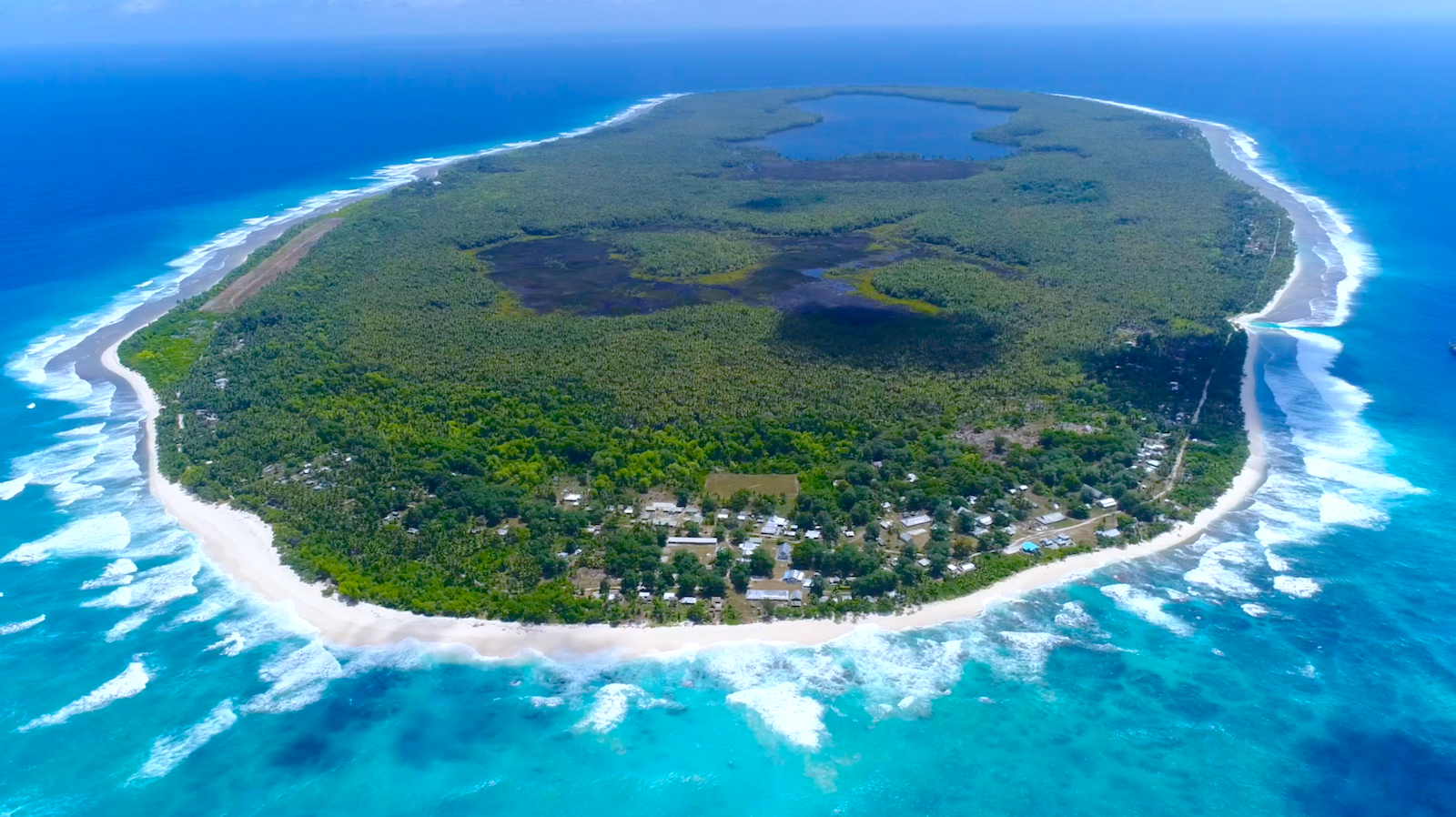
Washington Island, Northern Line Islands, Kiribati
EXPLORATORY MISSION – REGISTRATIONS OF INTEREST
Washington Island, officially known as Teraina, is one of the most unusual islands in the Pacific.
Situated approximately 280 miles (450 km) northwest of Kiritimati (CXI), Teraina belongs to Kiribati’s Northern Line Islands. Unlike the open-lagoon atolls normally associated with Kiribati, Teraina is a raised coral island whose former marine lagoon has developed into a permanent freshwater lake.
Hidden beneath dense coconut and Pisonia forest, Washington Lake is the only permanent freshwater lake in Kiribati. It is reported to contain milkfish, freshwater eels, tilapia and, most intriguingly, a population of freshwater trevally whose identity and sporting potential remain largely unexplored.
In partnership with local leaders, fishers and residents of Teraina, No Slack Loops is planning a genuine exploratory fishing mission for 2027. Their knowledge and leadership are fundamental to the expedition. They understand the lake, canals, reef, weather and practical realities of the island in ways no visiting team could replicate.
Our objectives are simple: reach the lake, investigate its extraordinary fish population and explore the island’s exposed outer reefs for giant trevally and other marine predators.
This is not an established fishing package. It is a genuine exploratory expedition into an unknown and logistically demanding fishery.
LOCATION
Teraina lies north of the equator in the Northern Line Islands of the Republic of Kiribati.
The island covers approximately 5 square miles (3200 acres/14 sq km) and supports a population of around 2,000 people. It is one of the wettest islands in Kiribati, receiving enough rainfall to maintain its extraordinary freshwater lake.
Dense vegetation distinguishes Teraina from the drier coral landscapes of Kiritimati and Fanning Island. Much of its interior is covered by coconut palms, Pisonia forest, wetlands and peat deposits.
Washington Lake occupies a substantial portion of the island. There is no conventional road to much of the lake, and access traditionally involves travelling by small boat through narrow, forested canals.
Surrounding the island is an exposed coral reef dropping into the deep waters of the Pacific. There is no protected saltwater lagoon or navigable ocean pass. Access to the reef edge will therefore depend entirely upon local boats, swell, wind and the judgement of our resident team.
FROM SALTWATER LAGOON TO FRESHWATER LAKE
Washington Lake is not an ordinary inland lake. In fact, we were conflicted in our decision to categorize this trip as saltwater and not freshwater!
Teraina developed on an ancient coral-reef platform. Geological research indicates that the lake occupies what was once a marine lagoon associated with that reef system. As the basin became isolated from the surrounding Pacific, its connection with the ocean was progressively lost.
Teraina’s unusually high rainfall then transformed the enclosed environment. Over time, freshwater replaced the original saline conditions while organic material accumulated over the remnants of the former reef and lagoon floor.
Today, the lake sits above sea level and is maintained by rainfall and the island’s freshwater system. Beneath its water and organic sediments remains the structure of an ancient coral environment, including remnants of the original patch reef.
This transition from marine lagoon to freshwater lake may help explain its extraordinary fish population. Milkfish, eels and trevally are all species with marine origins or life histories connected to the sea, yet populations are reported from a lake now considered fresh water.
Precisely how the trevally and milkfish entered the lake, how long they have been isolated and whether any connection with the ocean remains are among the questions we hope to explore alongside the people of Teraina.
The lake presents more than a fishing opportunity. It is a remarkable living system in which the geological history of a coral island, exceptionally high rainfall and the adaptability of marine fish have come together.
GETTING THERE
The expedition begins and ends on Kiritimati (Christmas Island) using Cassidy International Airport (CXI) as our gateway. Guests can fly direct into CXI from Honolulu or Nadi, Fiji.
Air Kiribati currently operates a limited Twin Otter service between Kiritimati and Washington Island, sometimes in combination with its Fanning Island route. The 2027 timetable has not yet been published (but we don’t expect it to change), and flights to Teraina remain vulnerable to weather, runway conditions, aircraft availability and operational changes.
We are in regular contact with the airline due to our other Kiribati trip activity. and will coordinate the expedition around the confirmed Air Kiribati schedule and arrange return domestic flights between Kiritimati and Teraina.
Small-aircraft baggage capacity presents one of our principal logistical challenges. In addition to anglers and fishing equipment, we intend to move a significant quantity of food, packaged drinking water, camping materials and other expedition supplies onto the island.
Where necessary, supplies will be sent ahead or coordinated separately from passenger baggage. Guests will receive precise baggage and equipment instructions once aircraft capacity and freight arrangements have been confirmed.
THE FRESHWATER MYSTERY
Washington Lake is a freshwater ecosystem occupying an ancient marine basin. Hidden beneath its water and organic sediments are the remains of the coral environment from which the island developed.
Scientific surveys and local accounts have reported milkfish, long-finned freshwater eels, tilapia and an unidentified freshwater trevally belonging to the genus Caranx.
The trevally are sometimes described locally as giant trevally. However, their exact species, abundance, size and behaviour have not been adequately documented. We do not yet know whether they are true giant trevally, another Caranx species or a population displaying unusual adaptation to the lake. Finding out is one of the principal objectives of this mission. We are bringing an experienced marine biologist within our group to support our research.
We intend to explore the lake using locally available boats and knowledge, searching for areas where trevally and milkfish can be observed and approached with fly or conventional tackle.
This will not resemble conventional flats fishing. Washington Lake can be turbid and is surrounded by thick tropical vegetation. Access, visibility, depth and casting room may all be challenging. We may spend substantial time traveling, investigating access routes, speaking with local fishers and experimenting with techniques.
MILKFISH
The presence of milkfish in Washington Lake is better documented. Kiribati government fisheries surveys conducted during the 1980s recorded milkfish, long-finned eels and tilapia in Teraina’s freshwater system.
Whether the lake’s milkfish can be consistently located or caught on fly remains unknown. Milkfish are notoriously difficult targets even in established saltwater destinations, and their feeding behaviour in this freshwater environment may be different again.
We will investigate accessible shorelines, canals, open areas and any observable feeding activity. Anglers should approach the milkfish component as exploration rather than a guaranteed fishing programme.
THE OUTER REEF
When weather and swell permit, we will also explore Teraina’s outer reef for giant trevally and other marine species.
Unlike Kiritimati or Fanning, Teraina has no protected saltwater lagoon. Its surrounding reef is exposed directly to the Pacific, and launching or operating small boats can be difficult.
Historical fisheries surveys around Teraina recorded black and dusky trevally, rainbow runner, amberjack, grouper, snapper, wahoo and other marine species. Giant trevally occur throughout the Northern Line Islands, but Teraina has no established recreational GT fishery.
Our fly fishing may include casting from accessible beaches and reef edges, together with fishing from locally operated boats where possible. Any offshore activity with conventional tackle will be conditional upon safe sea conditions and the capabilities of the vessels available to us. Local leaders and boat operators will make the final decisions concerning safe access and daily operations.
PLANNED AND LED WITH TERAINA
This expedition is being developed alongside the people of Teraina. Local leaders, fishers, boat operators, families and other community members will help determine how the mission operates. Their knowledge will guide our access to Washington Lake, movement through the canals, selection of fishing areas, use of local boats and decisions concerning the exposed outer reef.
They will also help us understand the lake’s fish, the history of the island and the cultural and practical considerations that visiting anglers must respect.
No Slack Loops will coordinate the wider expedition, including flights, freight, food, drinking water, camping equipment and angler preparation. On Teraina, local knowledge and leadership will be central to every successful day.
The island’s residents understand how to reach the lake, which boats can operate in its canals, where trevally and milkfish have historically been observed, how rainfall affects access and where the outer reef can be approached safely.
A significant portion of the $4,500 expedition fare will remain on Teraina, supporting the households and community members providing accommodation, guiding, boats, fuel, meals, transport and logistical assistance.
We want to investigate whether a small, carefully managed recreational fishery could provide continuing value to the community while respecting local authority, subsistence needs and the ecological importance of Washington Lake. Without the leadership and participation of the people of Teraina, this expedition would not be possible.
ACCOMMODATION
Accommodation on Teraina will be arranged through the local community and may combine available island housing with expedition-style camping.
No Slack Loops will provide the principal camping equipment, including inflatable mattresses and other essential shared materials. A final personal equipment list will be issued once the housing and camping arrangements have been inspected and confirmed.
Guests should expect very basic conditions. Electricity, refrigeration, bathrooms, communications and sleeping facilities may be limited. There is no conventional fishing lodge and no resort infrastructure – we make no apologies for that. The accommodation reflects both the remoteness of Teraina and the exploratory nature of the mission.
We will transport a substantial supply of food, snacks, non-alcoholic beverages and packaged drinking water from Kiritimati. Meals will be prepared in cooperation with our local hosts and supplemented by suitable island produce when available.
DATES
We are currently developing this exploratory mission for mid-2027. Final dates will depend upon Air Kiribati’s confirmed timetable, aircraft and freight capacity, runway conditions, community arrangements, local boats and the relevant visitor and fishing permissions, and our own busy expedition schedule.
We welcome expressions of interest from anglers who would like to receive further information as the program is finalized. Submitting an expression of interest does not constitute a confirmed booking or require any payment at this stage.
DETAILS
This mission is intended for adaptable, experienced anglers who understand the difference between an exploratory expedition and an established fishing adventure.
Days may involve long periods of walking, boating through canals, investigating access routes, speaking with local fishers and testing unfamiliar water. Tropical rain, heat, humidity, insects, mud and changing plans should all be expected.
The fishing could be extraordinary. It could also be extremely difficult. We may find that the lake’s fish cannot be effectively targeted with the equipment or access available to us. Guests must be comfortable participating in an expedition where discovery, not guaranteed catch, is the objective.
INCLUSIONS
The $4,500 expedition fare includes:
Return flights between Kiritimati and Washington Island
Pre-trip planning and expedition logistics
Accommodation, meals or fishing on Kiritimati (Wednesday night & Tuesday night)
Local accommodation and camping arrangements on Teraina (Thursday to Tuesday)
Inflatable mattresses, fans and shared camping materials
All meals while on Teraina
Snacks and non-alcoholic beverages
Packaged drinking water transported onto the island
Local boats and fuel allocated to the expedition
Local guides, boat operators and community support
Island transport where available
Coordination of local fishing access and permissions
A significant direct contribution to the Teraina community, and
No Slack Loops hosting and expedition coordination.
EXCLUSIONS
The expedition fare does not include:
International flights to and from Kiritimati
Alcoholic beverages
Personal baggage and sleeping gear
Rods, reels, lines, leaders and other fishing equipment
Airline excess-baggage charges beyond the expedition’s agreed allowance
Travel, cancellation, medical and evacuation insurance
Passport, entry or medical expenses
Gratuities or additional personal gifts
Items of a personal nature, and
Costs arising from weather, flight disruption or circumstances beyond our control.
EXPRESSIONS OF INTEREST
This expedition is still in development and is being planned jointly by No Slack Loops and members of the Teraina and wider Kiribati community. Final arrangements will reflect local guidance concerning access, accommodation, boats, fishing areas and the number of anglers the island can appropriately support.
By registering an expression of interest, you will receive further information as community arrangements, flight schedule and the expedition program are finalized.
If the idea of searching a freshwater lake in the middle of a remote Pacific coral island for trevally and milkfish appeals to you, give us a call or drop us an email.
EXPLORATORY MISSION – REGISTRATIONS OF INTEREST
Washington Island, officially known as Teraina, is one of the most unusual islands in the Pacific.
Situated approximately 280 miles (450 km) northwest of Kiritimati (CXI), Teraina belongs to Kiribati’s Northern Line Islands. Unlike the open-lagoon atolls normally associated with Kiribati, Teraina is a raised coral island whose former marine lagoon has developed into a permanent freshwater lake.
Hidden beneath dense coconut and Pisonia forest, Washington Lake is the only permanent freshwater lake in Kiribati. It is reported to contain milkfish, freshwater eels, tilapia and, most intriguingly, a population of freshwater trevally whose identity and sporting potential remain largely unexplored.
In partnership with local leaders, fishers and residents of Teraina, No Slack Loops is planning a genuine exploratory fishing mission for 2027. Their knowledge and leadership are fundamental to the expedition. They understand the lake, canals, reef, weather and practical realities of the island in ways no visiting team could replicate.
Our objectives are simple: reach the lake, investigate its extraordinary fish population and explore the island’s exposed outer reefs for giant trevally and other marine predators.
This is not an established fishing package. It is a genuine exploratory expedition into an unknown and logistically demanding fishery.
LOCATION
Teraina lies north of the equator in the Northern Line Islands of the Republic of Kiribati.
The island covers approximately 5 square miles (3200 acres/14 sq km) and supports a population of around 2,000 people. It is one of the wettest islands in Kiribati, receiving enough rainfall to maintain its extraordinary freshwater lake.
Dense vegetation distinguishes Teraina from the drier coral landscapes of Kiritimati and Fanning Island. Much of its interior is covered by coconut palms, Pisonia forest, wetlands and peat deposits.
Washington Lake occupies a substantial portion of the island. There is no conventional road to much of the lake, and access traditionally involves travelling by small boat through narrow, forested canals.
Surrounding the island is an exposed coral reef dropping into the deep waters of the Pacific. There is no protected saltwater lagoon or navigable ocean pass. Access to the reef edge will therefore depend entirely upon local boats, swell, wind and the judgement of our resident team.
FROM SALTWATER LAGOON TO FRESHWATER LAKE
Washington Lake is not an ordinary inland lake. In fact, we were conflicted in our decision to categorize this trip as saltwater and not freshwater!
Teraina developed on an ancient coral-reef platform. Geological research indicates that the lake occupies what was once a marine lagoon associated with that reef system. As the basin became isolated from the surrounding Pacific, its connection with the ocean was progressively lost.
Teraina’s unusually high rainfall then transformed the enclosed environment. Over time, freshwater replaced the original saline conditions while organic material accumulated over the remnants of the former reef and lagoon floor.
Today, the lake sits above sea level and is maintained by rainfall and the island’s freshwater system. Beneath its water and organic sediments remains the structure of an ancient coral environment, including remnants of the original patch reef.
This transition from marine lagoon to freshwater lake may help explain its extraordinary fish population. Milkfish, eels and trevally are all species with marine origins or life histories connected to the sea, yet populations are reported from a lake now considered fresh water.
Precisely how the trevally and milkfish entered the lake, how long they have been isolated and whether any connection with the ocean remains are among the questions we hope to explore alongside the people of Teraina.
The lake presents more than a fishing opportunity. It is a remarkable living system in which the geological history of a coral island, exceptionally high rainfall and the adaptability of marine fish have come together.
GETTING THERE
The expedition begins and ends on Kiritimati (Christmas Island) using Cassidy International Airport (CXI) as our gateway. Guests can fly direct into CXI from Honolulu or Nadi, Fiji.
Air Kiribati currently operates a limited Twin Otter service between Kiritimati and Washington Island, sometimes in combination with its Fanning Island route. The 2027 timetable has not yet been published (but we don’t expect it to change), and flights to Teraina remain vulnerable to weather, runway conditions, aircraft availability and operational changes.
We are in regular contact with the airline due to our other Kiribati trip activity. and will coordinate the expedition around the confirmed Air Kiribati schedule and arrange return domestic flights between Kiritimati and Teraina.
Small-aircraft baggage capacity presents one of our principal logistical challenges. In addition to anglers and fishing equipment, we intend to move a significant quantity of food, packaged drinking water, camping materials and other expedition supplies onto the island.
Where necessary, supplies will be sent ahead or coordinated separately from passenger baggage. Guests will receive precise baggage and equipment instructions once aircraft capacity and freight arrangements have been confirmed.
THE FRESHWATER MYSTERY
Washington Lake is a freshwater ecosystem occupying an ancient marine basin. Hidden beneath its water and organic sediments are the remains of the coral environment from which the island developed.
Scientific surveys and local accounts have reported milkfish, long-finned freshwater eels, tilapia and an unidentified freshwater trevally belonging to the genus Caranx.
The trevally are sometimes described locally as giant trevally. However, their exact species, abundance, size and behaviour have not been adequately documented. We do not yet know whether they are true giant trevally, another Caranx species or a population displaying unusual adaptation to the lake. Finding out is one of the principal objectives of this mission. We are bringing an experienced marine biologist within our group to support our research.
We intend to explore the lake using locally available boats and knowledge, searching for areas where trevally and milkfish can be observed and approached with fly or conventional tackle.
This will not resemble conventional flats fishing. Washington Lake can be turbid and is surrounded by thick tropical vegetation. Access, visibility, depth and casting room may all be challenging. We may spend substantial time traveling, investigating access routes, speaking with local fishers and experimenting with techniques.
MILKFISH
The presence of milkfish in Washington Lake is better documented. Kiribati government fisheries surveys conducted during the 1980s recorded milkfish, long-finned eels and tilapia in Teraina’s freshwater system.
Whether the lake’s milkfish can be consistently located or caught on fly remains unknown. Milkfish are notoriously difficult targets even in established saltwater destinations, and their feeding behaviour in this freshwater environment may be different again.
We will investigate accessible shorelines, canals, open areas and any observable feeding activity. Anglers should approach the milkfish component as exploration rather than a guaranteed fishing programme.
THE OUTER REEF
When weather and swell permit, we will also explore Teraina’s outer reef for giant trevally and other marine species.
Unlike Kiritimati or Fanning, Teraina has no protected saltwater lagoon. Its surrounding reef is exposed directly to the Pacific, and launching or operating small boats can be difficult.
Historical fisheries surveys around Teraina recorded black and dusky trevally, rainbow runner, amberjack, grouper, snapper, wahoo and other marine species. Giant trevally occur throughout the Northern Line Islands, but Teraina has no established recreational GT fishery.
Our fly fishing may include casting from accessible beaches and reef edges, together with fishing from locally operated boats where possible. Any offshore activity with conventional tackle will be conditional upon safe sea conditions and the capabilities of the vessels available to us. Local leaders and boat operators will make the final decisions concerning safe access and daily operations.
PLANNED AND LED WITH TERAINA
This expedition is being developed alongside the people of Teraina. Local leaders, fishers, boat operators, families and other community members will help determine how the mission operates. Their knowledge will guide our access to Washington Lake, movement through the canals, selection of fishing areas, use of local boats and decisions concerning the exposed outer reef.
They will also help us understand the lake’s fish, the history of the island and the cultural and practical considerations that visiting anglers must respect.
No Slack Loops will coordinate the wider expedition, including flights, freight, food, drinking water, camping equipment and angler preparation. On Teraina, local knowledge and leadership will be central to every successful day.
The island’s residents understand how to reach the lake, which boats can operate in its canals, where trevally and milkfish have historically been observed, how rainfall affects access and where the outer reef can be approached safely.
A significant portion of the $4,500 expedition fare will remain on Teraina, supporting the households and community members providing accommodation, guiding, boats, fuel, meals, transport and logistical assistance.
We want to investigate whether a small, carefully managed recreational fishery could provide continuing value to the community while respecting local authority, subsistence needs and the ecological importance of Washington Lake. Without the leadership and participation of the people of Teraina, this expedition would not be possible.
ACCOMMODATION
Accommodation on Teraina will be arranged through the local community and may combine available island housing with expedition-style camping.
No Slack Loops will provide the principal camping equipment, including inflatable mattresses and other essential shared materials. A final personal equipment list will be issued once the housing and camping arrangements have been inspected and confirmed.
Guests should expect very basic conditions. Electricity, refrigeration, bathrooms, communications and sleeping facilities may be limited. There is no conventional fishing lodge and no resort infrastructure – we make no apologies for that. The accommodation reflects both the remoteness of Teraina and the exploratory nature of the mission.
We will transport a substantial supply of food, snacks, non-alcoholic beverages and packaged drinking water from Kiritimati. Meals will be prepared in cooperation with our local hosts and supplemented by suitable island produce when available.
DATES
We are currently developing this exploratory mission for mid-2027. Final dates will depend upon Air Kiribati’s confirmed timetable, aircraft and freight capacity, runway conditions, community arrangements, local boats and the relevant visitor and fishing permissions, and our own busy expedition schedule.
We welcome expressions of interest from anglers who would like to receive further information as the program is finalized. Submitting an expression of interest does not constitute a confirmed booking or require any payment at this stage.
DETAILS
This mission is intended for adaptable, experienced anglers who understand the difference between an exploratory expedition and an established fishing adventure.
Days may involve long periods of walking, boating through canals, investigating access routes, speaking with local fishers and testing unfamiliar water. Tropical rain, heat, humidity, insects, mud and changing plans should all be expected.
The fishing could be extraordinary. It could also be extremely difficult. We may find that the lake’s fish cannot be effectively targeted with the equipment or access available to us. Guests must be comfortable participating in an expedition where discovery, not guaranteed catch, is the objective.
INCLUSIONS
The $4,500 expedition fare includes:
Return flights between Kiritimati and Washington Island
Pre-trip planning and expedition logistics
Accommodation, meals or fishing on Kiritimati (Wednesday night & Tuesday night)
Local accommodation and camping arrangements on Teraina (Thursday to Tuesday)
Inflatable mattresses, fans and shared camping materials
All meals while on Teraina
Snacks and non-alcoholic beverages
Packaged drinking water transported onto the island
Local boats and fuel allocated to the expedition
Local guides, boat operators and community support
Island transport where available
Coordination of local fishing access and permissions
A significant direct contribution to the Teraina community, and
No Slack Loops hosting and expedition coordination.
EXCLUSIONS
The expedition fare does not include:
International flights to and from Kiritimati
Alcoholic beverages
Personal baggage and sleeping gear
Rods, reels, lines, leaders and other fishing equipment
Airline excess-baggage charges beyond the expedition’s agreed allowance
Travel, cancellation, medical and evacuation insurance
Passport, entry or medical expenses
Gratuities or additional personal gifts
Items of a personal nature, and
Costs arising from weather, flight disruption or circumstances beyond our control.
EXPRESSIONS OF INTEREST
This expedition is still in development and is being planned jointly by No Slack Loops and members of the Teraina and wider Kiribati community. Final arrangements will reflect local guidance concerning access, accommodation, boats, fishing areas and the number of anglers the island can appropriately support.
By registering an expression of interest, you will receive further information as community arrangements, flight schedule and the expedition program are finalized.
If the idea of searching a freshwater lake in the middle of a remote Pacific coral island for trevally and milkfish appeals to you, give us a call or drop us an email.